
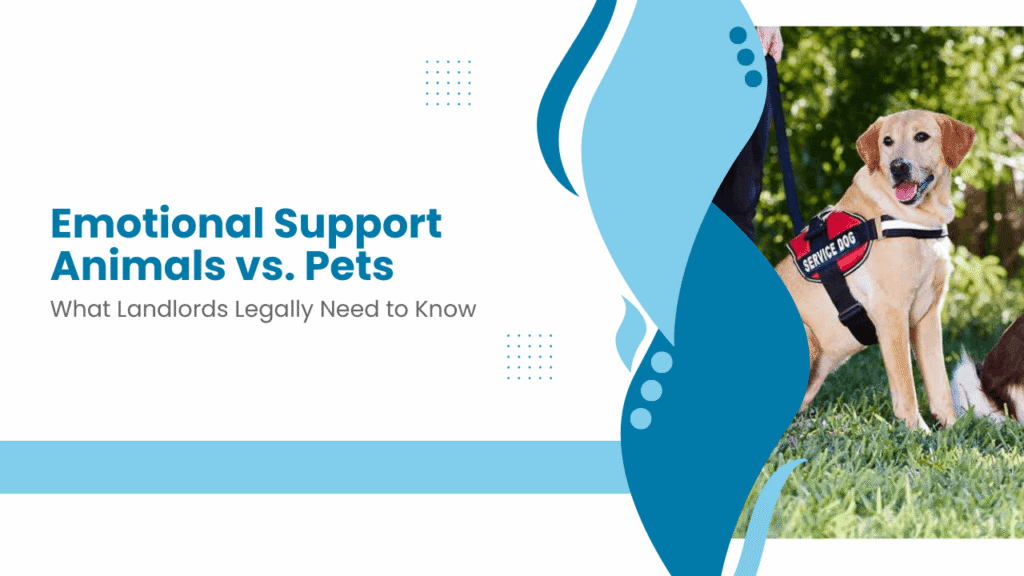
Are you unsure about the difference between pets and emotional support animals?
Supporting tenants with disabilities is the core of fair housing compliance. When you rent out a home, you’re required to navigate this legal and ethical framework which is designed to ensure equal access to housing. As a property management partner, our role is to help protect your investment while ensuring full compliance with all applicable state and federal laws.
Fair housing laws, in particular, require careful attention.
While most landlords understand the basics of discrimination and reasonable accommodations, emotional support animals, often referred to as ESAs, tend to blur the lines. These animals are frequently misunderstood.
They are not service animals, and they are not pets.
Because of that distinction, ESA requests can feel confusing or even uncomfortable for property owners who want to follow the law without exposing themselves to unnecessary risk.
So what should landlords know when a tenant requests an emotional support animal?
Our Summary:
|
Understanding Emotional Support Animals
Unlike service animals, which are individually trained to perform specific tasks for a person with a disability, emotional support animals provide therapeutic benefit simply through their presence. They help alleviate symptoms of mental or emotional conditions such as anxiety, depression, or PTSD. ESAs do not require specialized training, registration, or certification.
In San Diego, for an ESA to be legally recognized under fair housing laws, it must be recommended by a licensed healthcare provider or mental health professional as part of a treatment plan. When a tenant makes an ESA request, landlords are legally permitted to ask for documentation that confirms this need.
Common Concerns Landlords Have About ESAs
It’s natural for property owners to feel uneasy when emotional support animals enter the picture. Common concerns include potential property damage, excessive noise, disruptions to neighbors, and liability exposure.
Many landlords are accustomed to mitigating these risks with pet deposits, pet fees, or monthly pet rent. That strategy works for pets, but emotional support animals are treated differently under the law. Because ESAs are considered reasonable accommodations rather than pets, those fees cannot be applied.
There may also be concerns about neighbor complaints or shared spaces. What happens if another tenant is bothered by noise, has allergies, or feels unsafe around animals? And what about liability if an animal injures someone on the property?
These concerns are valid, and they’re exactly why having a clear, legally compliant approach is essential. While landlords cannot impose blanket restrictions on ESAs, they are still allowed to set reasonable behavioral expectations and hold tenants accountable for any damage or disturbances caused by their animal.
Fair Housing Laws and ESA Requests
Under the Fair Housing Act (FHA), landlords are prohibited from discriminating against individuals with disabilities. This protection includes tenants who require emotional support animals as part of their disability-related needs.
What does that mean in practice?
It means that landlords must allow emotional support animals, even in properties with strict no-pet policies, when a legitimate request is made. These requests can come from prospective tenants during the application process or from existing tenants at any point during the tenancy.
Here are two key legal principles every landlord should understand:
- Documentation Is Allowed
While landlords cannot require proof for service animals, they are allowed to request documentation for emotional support animals. A tenant may be asked to provide a letter from a licensed medical or mental health professional verifying the need for the ESA. The documentation should be current and clearly connect the tenant’s disability to the need for the animal.
- Pet Fees and Pet Rent Are Not Permitted
Because emotional support animals are not considered pets, landlords may not charge pet deposits, pet fees, or pet rent for them. Additionally, landlords generally cannot restrict the type, breed, or size of an ESA unless the animal poses a direct threat to health or safety or would cause substantial physical damage to the property.
Making Your Rental Property ESA-Compliant
Landlords who prepare in advance are far better positioned to handle ESA requests smoothly and legally.
- Start by educating yourself on fair housing laws, including the Fair Housing Act and the Americans with Disabilities Act, as well as any applicable state or local regulations.
- Do not hesitate to request proper documentation. Asking for a legitimate letter from a licensed healthcare provider is both lawful and appropriate. This step helps ensure the request is valid while protecting landlords from abuse of the system.
- It’s also wise to review and update lease agreements. Your lease should clearly state that while pets may be restricted or regulated, emotional support animals are permitted with appropriate documentation. This clarity helps avoid confusion and sets expectations from the beginning.
Open communication plays a crucial role as well. Encourage tenants to communicate openly about their needs and concerns. A respectful, transparent approach helps foster trust and reduces the likelihood of disputes or misunderstandings.
Addressing Challenges and Reducing Risk
 Concerns about damage and liability are often the biggest sources of anxiety for landlords.
Although you cannot charge additional fees for emotional support animals, tenants can still be held financially responsible for any damage their animal causes beyond normal wear and tear. This responsibility should be clearly outlined in the lease.
Navigating emotional support animal requests can feel complicated, but it’s becoming an increasingly common issue in today’s rental market. Landlords must strike a careful balance: complying with fair housing laws while protecting their property and avoiding misuse of ESA accommodations.
With the right policies, documentation procedures, and professional guidance, landlords can remain compliant without being taken advantage of. A proactive, informed approach not only reduces legal risk—it also creates a fair, respectful housing environment for everyone involved.
Our team is careful about remaining compliant with all fair housing laws and maintaining rental homes that are accessible to all. If you’d like some help with emotional support animals, contact us at Chase Pacific Property Management & Real Estate Sales.
